A Curious State of Being by Ellen Hawley
Hello,
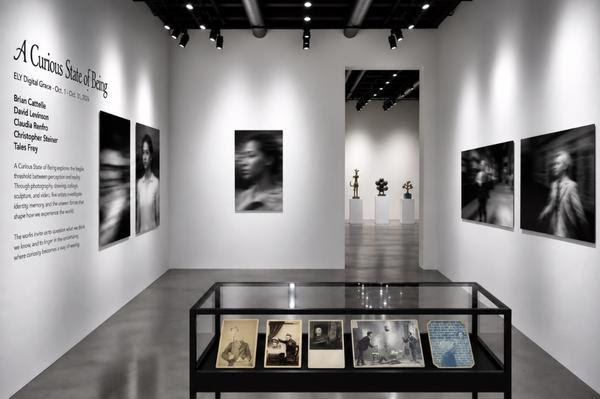
Just in time for Halloween, curator and former MOMA art educator Ellen Hawley and the ELY Center of Contemporary Art present the AI generated gallery housing real artwork by regional artists in the virtual exhibition “A Curious State of Being”.
I have had the pleasure of meeting Ellen at the Loft Artists Association in Stamford, Connecticut at one of her curator’s talks
AI has changed the way we live in countless ways, and it has definitely “rocked the boat” in the art world. Many art organizations have prohibited AI-generated—and sometimes even digital—artwork from their calls for art and exhibitions. Ellen takes a different approach. Rather than using AI to create the artwork itself, she utilizes it as a curatorial tool, constructing a virtual environment in which works from different periods, mediums, and artists can interact in unexpected ways.
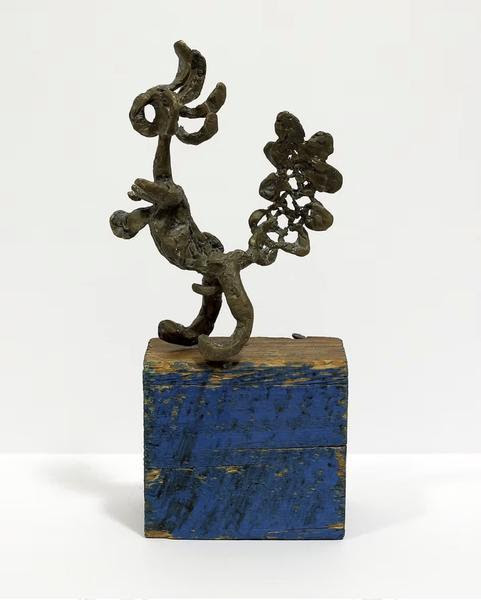
The exhibition brings together historic “Trick Art” photography from the Christopher B. Steiner Collection; contemporary black-and-white photography and 3D collaged masks by Brian Cattelle; drawings by Peter Levinson; upcycled bronze sculptures by Claudia Renfro; and performance, sculpture, and video art by Brazilian artist Tales Fray.
The result is delightfully contorted, macabre, and mysterious.
Turn-of-the-century “cutting-edge” photography and contemporary artwork fuse together in a strange visual conversation. As I move through the exhibition, I feel as though I am traveling through a portal, slipping back and forth between yesterday and today through art. The virtual gallery becomes its own surreal dreamscape.
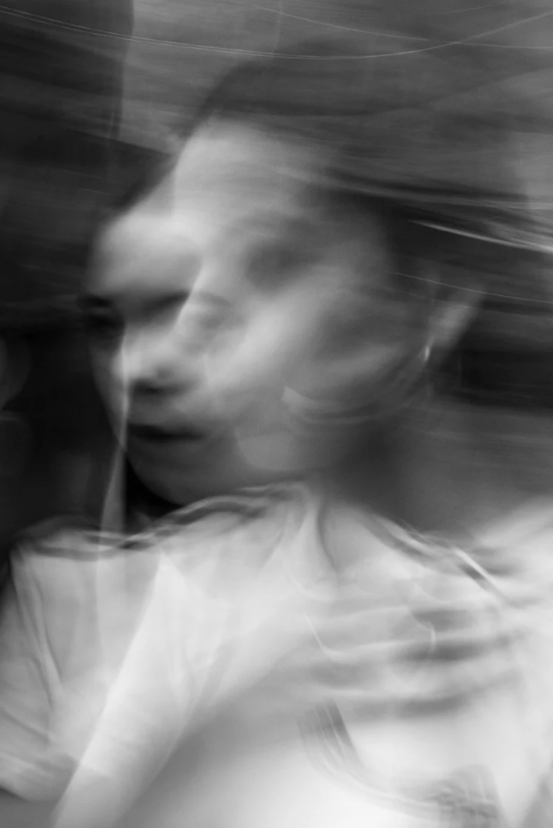
I especially love comparing and contrasting the historic “Trick Art” photographs with Brian Cattelle’s contemporary black-and-white street photography. In Spiritual Beings Having a Human Experience, #02b, Cattelle captures people in an ethereal, fleeting state of existence.
His work explores the tension between what we think we see and what we know. Everyday people become almost ghostlike—figures who seem to move between the physical and spiritual realms.
Placed alongside photographs created more than a century ago to trick the viewer’s eye, Cattelle’s work raises an intriguing question: How much can we really trust what we see?
And in an AI-generated gallery, that question feels especially relevant.
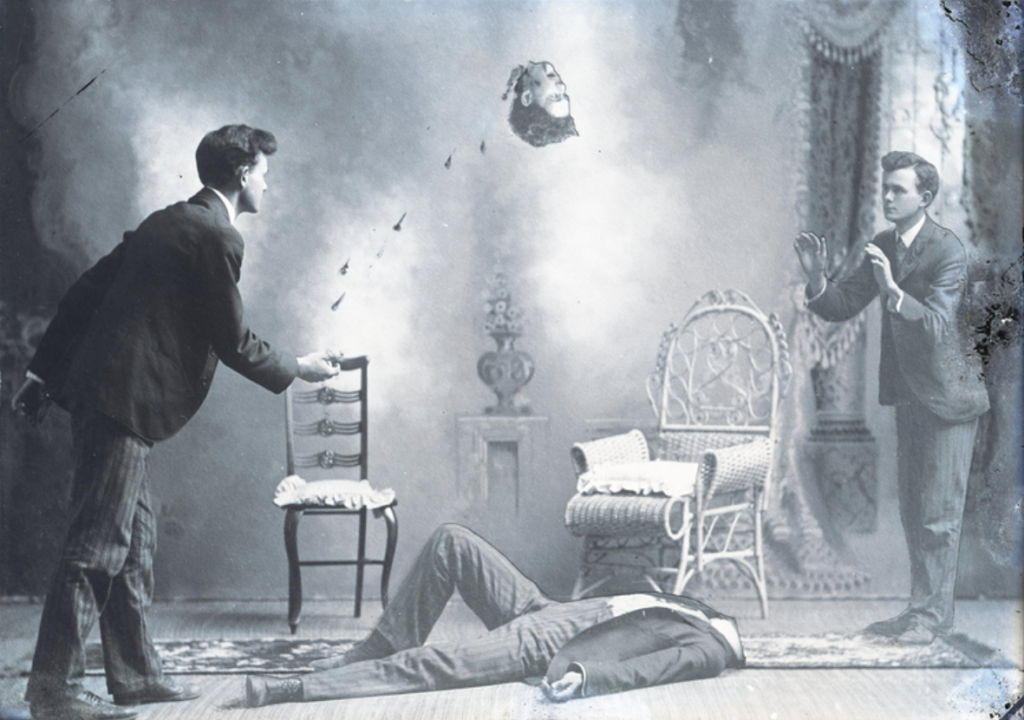
The “Trick Art” photography featured in the exhibition comes from the “…collection of Christopher Steiner, whose nearly 20,000 vernacular and anonymous photographs explore the curious space between evidence and illusion. A professor of art history and anthropology at Connecticut College, Steiner has assembled a fascinating collection of images that invite viewers to suspend their disbelief.
This selection focuses on the wonderfully strange tradition of “headless” photography. Beginning in the late nineteenth century, photographers experimented with multiple exposures, photomontage, composite printing, and carefully staged scenes to seemingly detach heads from bodies and transform apparent acts of violence into visual jokes. Macabre yet playful, these vintage photographs demonstrate how easily photography’s promise of truth can give way to fantasy, humor, and delightful deception.”
Looking at these photographs today, we can easily recognize the illusions. We understand that the photographers were having a bit of fun—captivating, amusing, and perhaps even frightening their audiences with images that seemed impossible.
But imagine encountering one of these photographs more than a century ago, when photography itself was still relatively new. How convincing—or unsettling—might it have been?
That makes these images particularly fascinating when viewed in an AI-generated gallery today. The technology has changed, but our fascination with manipulating reality has not. Then, as now, artists and image-makers ask us to question what we see—and how much of it we should believe.
I featured Renfro’s Blue Bird in today’s email for a more personal reason: my mother will be reading this review, and she loves bluebirds!
As always, Ellen Hawley curates and presents a show that is both cohesive and visually stimulating. A Curious State of Being is not your typical “witchy,” goth, or Halloween exhibition. Instead, it feels like a niche, museum-like experience—one that happens to be housed within a contemporary, AI-generated gallery.
What makes the exhibition especially intriguing is the collision of past and present. Real works by living contemporary artists share this virtual space with photographs created by artists and image-makers who lived more than a century ago. AI becomes the architecture that brings these different generations together.
The result is strange, playful, macabre, and thought-provoking—a fitting exhibition for Halloween, but one whose ideas about illusion, technology, perception, and what we believe to be “real” extend well beyond the season.
A Curious State of Being will be featured in Art Critic in 1 Minute reviews on Facebook, YouTube, LinkedIn, and Instagram.

Leave a Reply